

The Truth About Memory Foam Mattresses in Singapore's Humidity (And How to Sleep Cool)
Why Your Mattress Feels Like a Sauna at 3AM
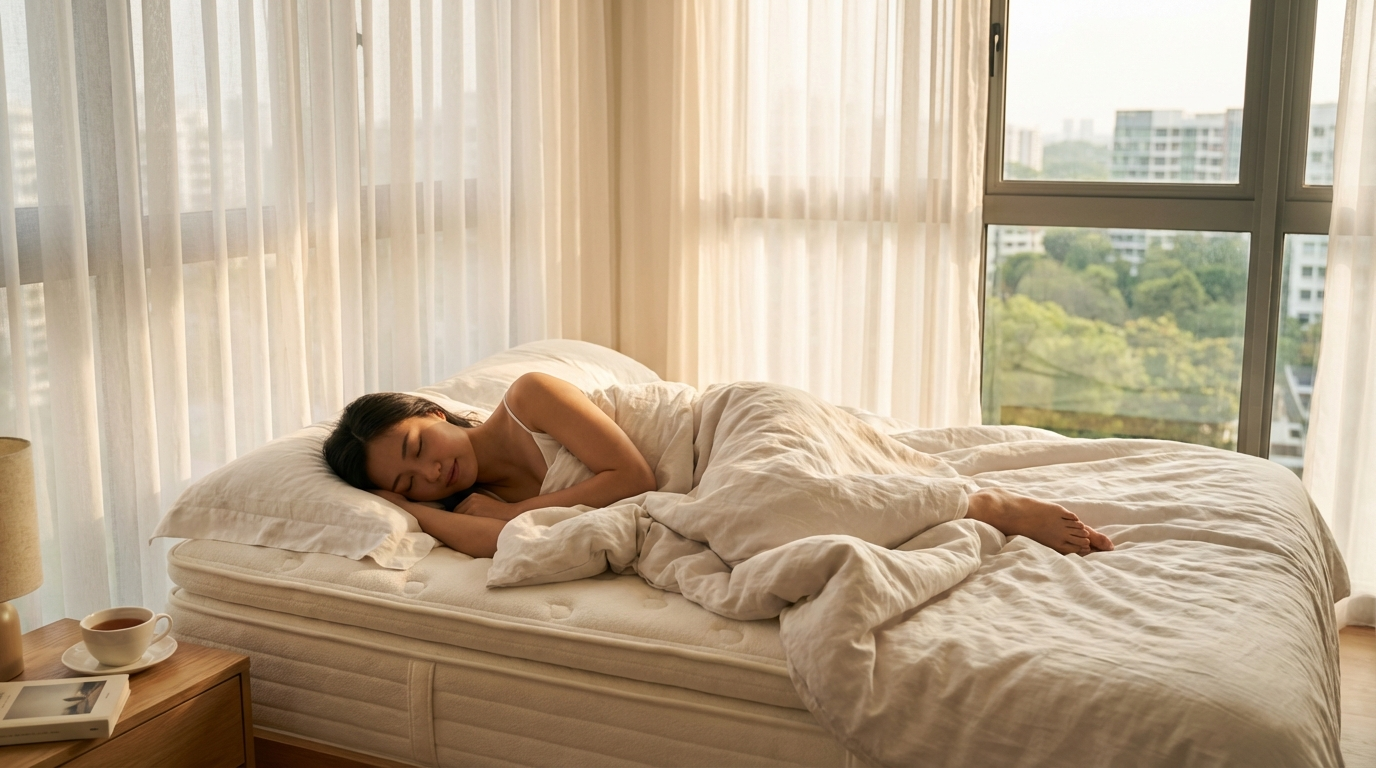
Every Singaporean has experienced it: you wake up at 3AM drenched in sweat, sheets sticking to your body, wondering why you spent good money on a mattress that turns into a heat trap. You crank the aircon down to 22°C, your electricity bill cries, and the cycle repeats.
If this sounds like your nightly reality, your mattress is probably working against you. And if it's a traditional memory foam mattress without cooling technology, that's almost certainly the problem.
The Science Behind the Sweat
Traditional memory foam is dense, closed-cell polyurethane that moulds to your body shape. This is amazing for pressure relief — it's why NASA developed it. But that same density traps body heat instead of letting it dissipate.
Now add Singapore's 84% average humidity. Your body generates heat. The foam absorbs it. The humid air prevents evaporation. You're essentially sleeping in a warm cocoon with zero ventilation.
The fix isn't abandoning memory foam — it's choosing the right kind.
Cooling Technologies That Actually Work
Gel-Infused Memory Foam
Cooling gel beads are embedded throughout the foam, actively absorbing and dispersing body heat. This is the most common and effective upgrade — and the difference is noticeable from night one. Our Rucas cooling mattress range uses this technology across every model.
Open-Cell Structure
Unlike traditional closed-cell foam that traps heat, open-cell memory foam has interconnected air pockets that promote airflow. Think of it as adding ventilation holes to the foam itself.
Latex Hybrid Construction
Natural latex is inherently breathable and doesn't retain heat like pure memory foam. A hybrid mattress combining latex with memory foam gives you the pressure relief of foam with the breathability of latex. Plus, the pocket spring base layer creates natural air channels underneath.
What to Look for When Mattress Shopping in Singapore
- Cooling technology is non-negotiable — gel-infused, graphite-infused, or copper-infused foam. If the mattress doesn't mention cooling, skip it.
- Breathable cover fabric — look for Tencel, bamboo, or CoolMax fabrics. Avoid polyester covers.
- Medium-firm support — Singapore's orthopaedic specialists generally recommend medium-firm for our population. Too soft accelerates back problems; too hard creates pressure points.
- Trial period — any mattress worth buying offers at least a 30-night trial. You can't judge a mattress in a 2-minute showroom test.
The Sleeping Position Factor
Side sleepers: You need a softer surface to cushion your shoulders and hips. Memory foam is your best friend — just make sure it's the cooling kind.
Back sleepers: Medium-firm works best. You want enough give to maintain your spine's natural curve without sinking.
Stomach sleepers: Firmer is better. Too much sinking strains your lower back. Consider a thinner memory foam layer over springs.
Care Tips for Mattresses in Singapore's Climate
- Use a mattress protector from day one — it's your first defence against humidity and dust mites
- Rotate your mattress every 3 months (head to foot)
- Air your mattress monthly — strip the sheets and let it breathe for a few hours
- Run a dehumidifier in your bedroom if possible
- Avoid placing the mattress directly on the floor — always use a proper bed frame for ventilation
Sleep Better Tonight
You spend a third of your life on your mattress. In Singapore's climate, that means roughly 8 hours every night fighting heat and humidity — unless your mattress is built for it.
Explore our Rucas mattress collection — every model features cooling gel technology, breathable construction, and firmness levels designed for Singapore sleepers. Your 3AM self will thank you.